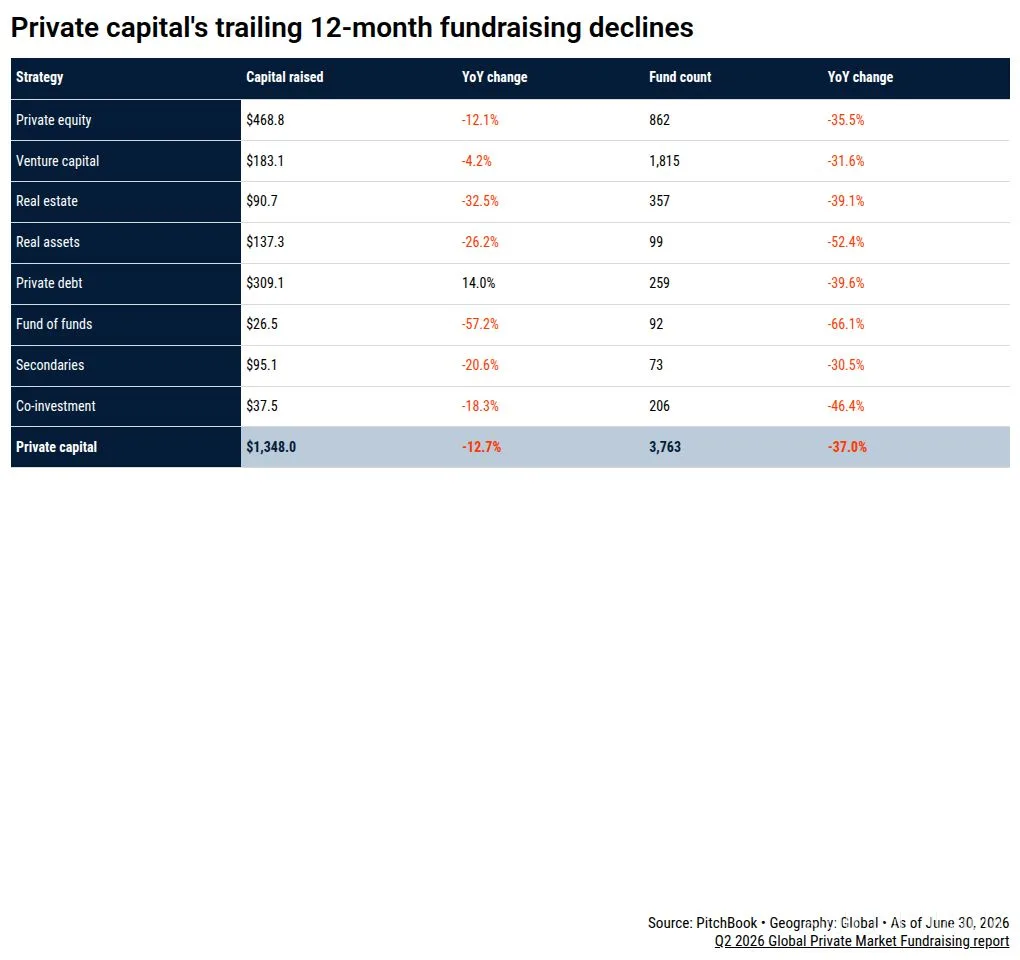
The decline in private market financing is clearly shown in the new report, indicating that this trend continues for the fifth consecutive year. According to the Global Private Market Financing Report for H1 2026, all private market strategies except private debt have experienced annual declines.
Challenges for Limited Partners
Limited partners (LPs) are facing more limited options due to reduced exits and distributions in the industry. They can transfer their assets to the secondary market, borrow against their portfolio value, or wait. In any case, there is less liquidity in the system for reallocation to subsequent funds.
Read more: Inflation Rate in Britain Reached 3.1% in August
The rate of financing in the private market has reached its lowest level in history, indicating deeper concerns about the market. Limited partners have become more cautious about their commitments for various reasons, including economic instability and uncertainty in returns.
Support for Larger Funds
In particular, the funds that limited partners support are larger and carry less risk. Funds closed in H1 2026 with amounts of $1 billion or more account for 78.2% of total capital raised, up from 59.1% in 2021. This trend reflects limited partners' willingness to invest in more established and safer projects.
Meanwhile, returns from the largest alternative asset managers have consistently underperformed compared to their smaller rivals since around 2015. This performance imbalance further encourages LPs to approach their choices with greater caution.
There is now a need for a fundamental reconsideration of financing strategies, and investors are seeking new solutions to improve market conditions. Given the current situation, it is expected that the state of financing in the private market will remain influenced by existing challenges.
Read more: Asian Currency Volatility Following Dollar Strengthening and Yen Decline to Lowest Weekly Level · Three Dividend Kings to Buy in the Current Market Conditions