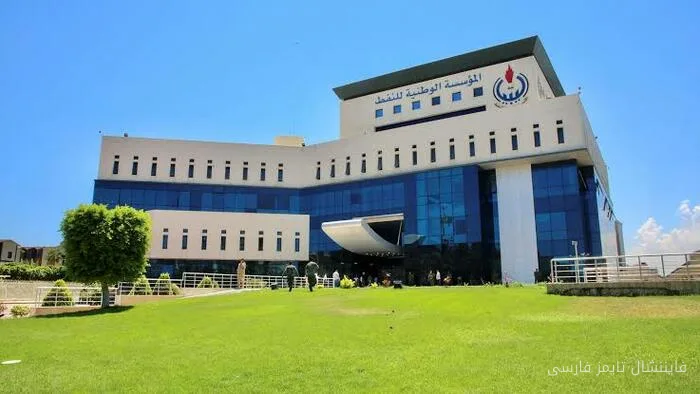
The National Oil Corporation of Libya (NOC) has announced that it may take action to declare force majeure following a halt in production at the Hamada and Tahara oil fields. This stoppage is due to the closure of a valve in the main Hamada-Zawiya pipeline by members of the security force responsible for protecting the country's oil infrastructure.
Production halt and threat of further reduction
Oil production has been completely halted at the Hamada and Tahara fields as well as at a pumping station. The facility protection force has announced that for a week, there will be a partial production reduction in several other fields including Wafa, Al-Khums, and Al-Feel, and if its demands are not met, it will pursue a complete production halt.
Read more: Bitcoin drops to $76,862 as chances of the Clarity Act weaken
Security force demands and the future of oil production
The facility protection force is demanding the transfer of its financial and administrative oversight from the Libyan Ministry of Defense to the National Oil Corporation and has requested a timeline for the completion of this transfer. If the closed valve is not reopened, NOC has warned that it may declare force majeure or if similar halts affect other oil fields.
Libya has faced such challenges in the past. Political groups, armed groups, and workers have frequently used oil fields, pipelines, and terminals as leverage. This disruption occurs as Libya is trying to significantly increase its oil production.
The country's oil production has reached about 1.4 million barrels per day, the highest level in over a decade. NOC aims to reach a production level of 1.6 million barrels per day by the end of 2026 and 2 million barrels per day by the early 2030s. Achieving these goals requires foreign investment of between $36 to $40 billion.
International companies are also gradually returning to Libya. This year, the country has signed exploration and production sharing agreements with companies such as Repsol, Turkey's oil, Eni, Qatar Energy, and MOL. BP, Shell, Exxon, and Chevron are also pursuing a return to this market.
The National Oil Corporation has also allocated $2 billion in Libya's 2026 budget to support its production plans. However, the problem is far older than investment plans: oil fields capable of producing more oil are still at risk of being controlled by those who oversee the valves.
Read more: Cathie Wood buys shares of Garden Health and sells shares of Iridium · 4% drop in global oil supply due to Saudi pipeline halt