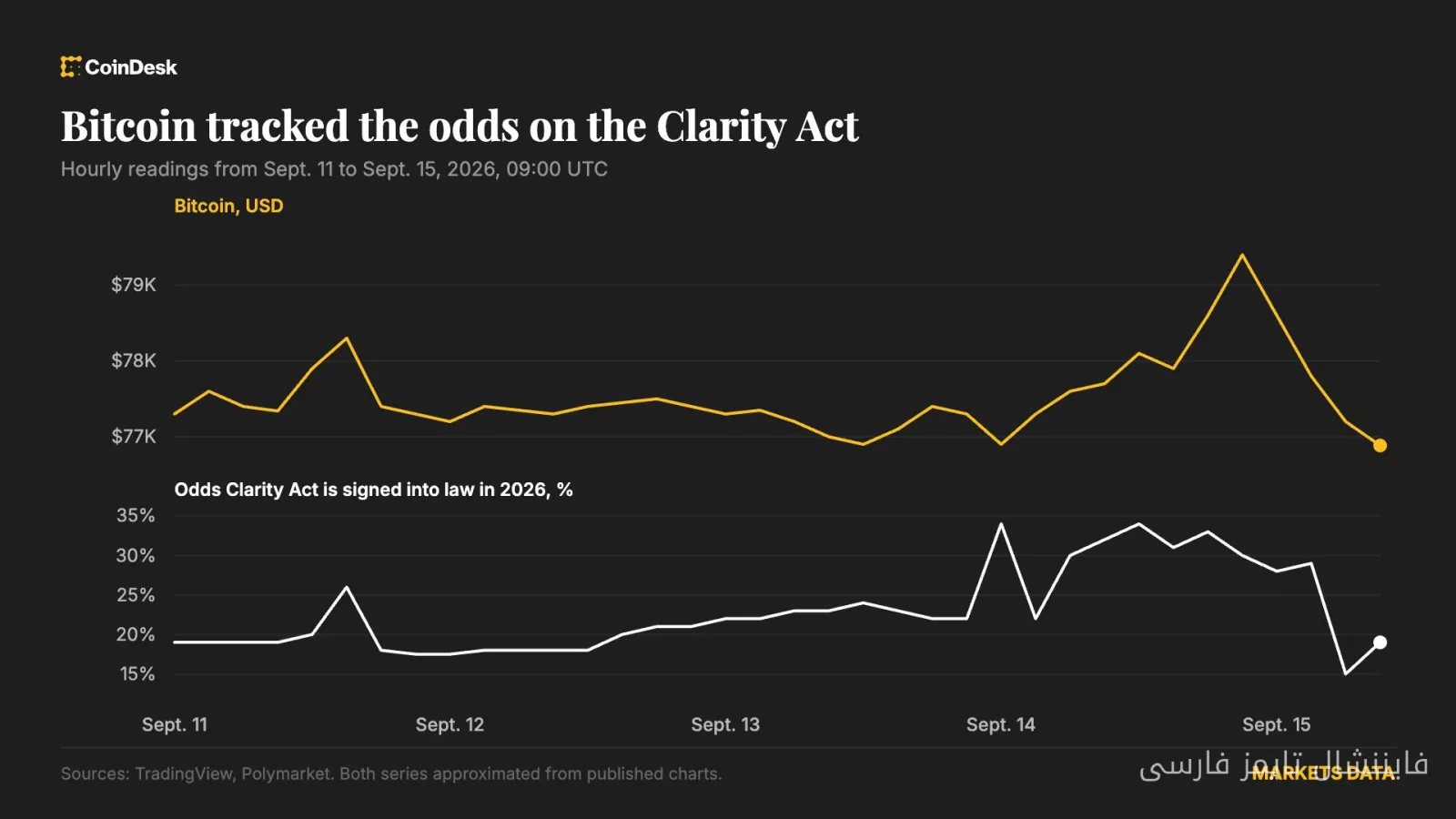
Bitcoin (Bitcoin) dropped to $76,862 on Tuesday after a price increase on Monday that brought it to $79,427. This 1.7 percent decline from midnight UTC, and 6.6 percent from this month's high of $82,284 on September 4, reflects significant volatility in the cryptocurrency market.
Decline in Bitcoin and Other Cryptocurrencies
Following the drop in Bitcoin's price, Ethereum (Ether) also fell by 1.6 percent to $2,474.76. Additionally, Solana (Solana) plummeted 2 percent to $100.43. This price drop indicates widespread selling pressure on these digital assets.
Read more: Triton Uranium Reports a £46.5 Million Resource at the Atlas Project
Predictions for the potential passage of the Clarity Act in the United States, seen as an important step for regulating the cryptocurrency market, reached 34 percent on Monday. However, this figure dropped to 17 percent on Tuesday. This decline was due to news that Democrats had prepared a new proposal after the revised draft was rejected by Republican negotiators on Sunday. This new proposal pertains to ethical issues regarding officials' cryptocurrency assets, rather than the market structure itself.
Impacts on Traditional Markets and Overall Trends
While the cryptocurrency market faced price declines, traditional markets moved towards gains. Nasdaq 100 futures rose by 0.43 percent and S&P 500 futures increased by 0.35 percent, indicating a recovery from some of Monday's losses related to AI-driven sell-offs. Additionally, the dollar index also rose by 0.17 percent, reflecting investors' preference for traditional assets over cryptocurrencies.
Sell pressure in the cryptocurrency market was widely felt, with 92 out of 100 assets in the CoinDesk index declining on Tuesday. Meanwhile, the overall index also faced a 1.6 percent drop, indicating investors' concerns about the future of the cryptocurrency market.
However, in some sectors, particularly in tokenized assets, inflows have significantly increased. Specifically, Binance's bStocks have reached about $118.5 million over the past two months and now account for around 90 percent of DEX trading volume on-chain. This trend may signal investors' willingness to explore new opportunities in the cryptocurrency market.
Read more: RBC Capital Updates ResMed Stock Rating Due to Growth in Sleep Devices · No Rate Increase Based on PCE That Will Be Revised