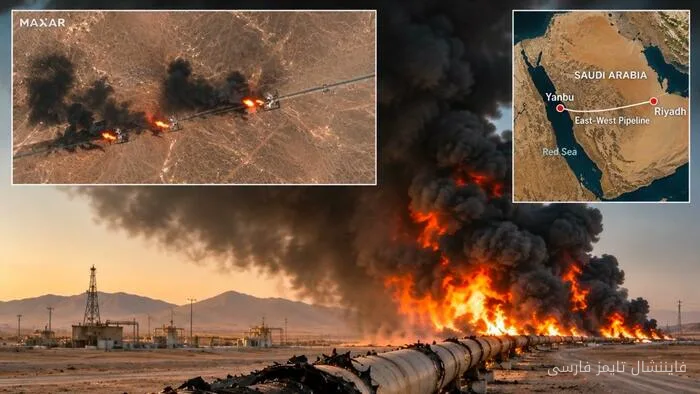
U.S. Energy Secretary Chris Wright announced that Saudi Arabia's East-West oil pipeline may be back in operation in a few days. This announcement provides a relatively clear timeline for a return to normalcy, while this pipeline previously transported about 4 to 5 million barrels of oil per day through the Strait of Hormuz, which is largely closed.
Details of Damage and Repairs
The 1,200-kilometer pipeline was halted following an attack last week that damaged the system. Wright stated that Saudi officials are still assessing the damages, but repairs are expected to be completed in a few days, not weeks.
Read more: Flotek Industries CEO Matthew Wicks added $34.3 million to his assets
Impact on Global Oil Supply
This pipeline transports an average of 4 to 5 percent of the global oil supply to the port of Yanbu on the Red Sea, allowing Saudi Arabia to continue its exports while traffic through Hormuz is severely restricted. Previous estimates suggested that the shutdown of this pipeline could last several weeks, raising concerns that stored inventories in Yanbu could soon run out.
Some of these disruptions have reached buyers. Saudi Aramco has canceled or delayed some crude oil shipments to several European refineries in late September. Poland's Orlen is also trying to purchase North Sea crude and is seeking WTI crude from Midland, Texas, and Kazakhstan's CPC blend, as Saudi deliveries have decreased. According to Vortexa data, no Saudi crude has left Yanbu since September 11.
Saudi crude oil supply in August dropped to 6 million barrels per day, a decrease of 2.3 million barrels from the previous month and the lowest level in over three decades.
The closure of this pipeline led to an increase in crude oil prices on Monday and Tuesday, with Brent crude reaching over $108 per barrel as traders considered the possibility of further supply reductions.
Wright also noted that Saudi Arabia is trying to move more oil through Hormuz with U.S. military assistance. The resumption of this pipeline's operations in a few days will restore one of the few high-capacity routes for transporting Gulf oil without needing the Strait of Hormuz, occurring before Yanbu's inventories run out.
Read more: Sharp decline in Sydney housing created a significant budget deficit for the state · WTI crude stabilizes near a peak of $104.46