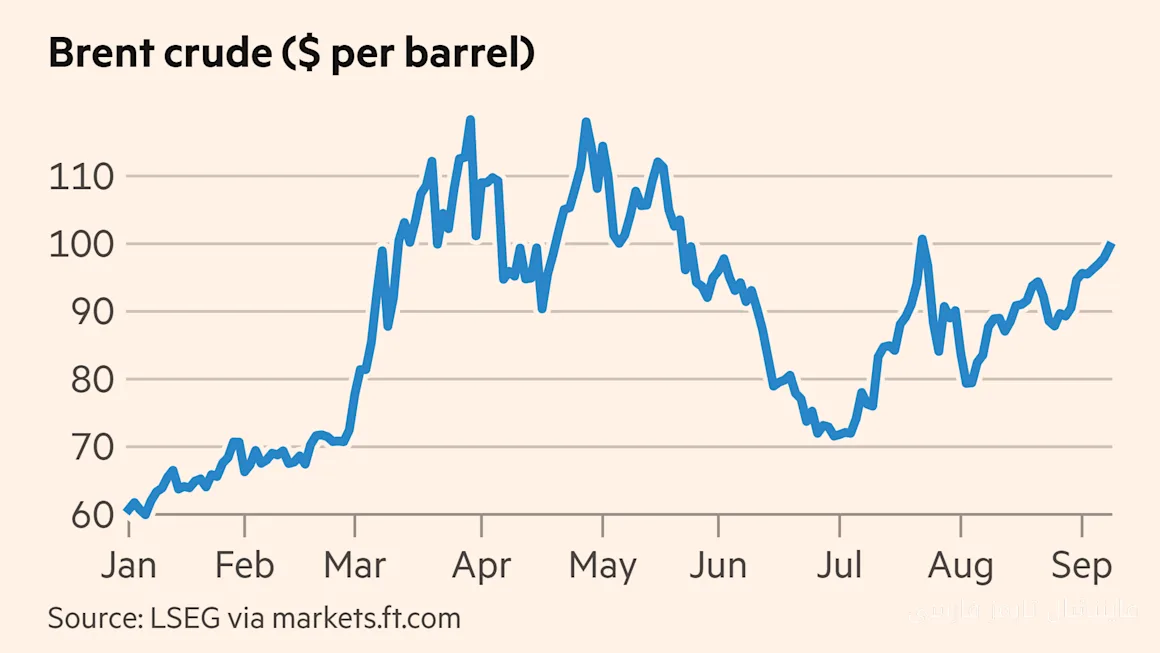
Brent crude oil prices have reached $۱۰۰ per barrel, creating serious concerns in global markets. The price increase comes as analysts and market participants warn of a new supply crisis in the near future. In recent days, various factors, including geopolitical tensions and production cuts in some oil-exporting countries, have fueled this rise.
Reasons for the Increase in Oil Prices
One of the main factors driving up oil prices is concerns about the continued reduction in supply from major producers. While some countries struggle with production issues, global demand for oil continues to rise. This situation could lead to serious shortages in the market and push prices to higher levels.
Additionally, political and economic developments in key oil-producing regions, including the Middle East, have had direct and indirect impacts on the global market. For instance, recent tensions in some oil-rich countries have heightened concerns about the continuity of supply and meeting global needs.
Economic Consequences
The increase in oil prices could have widespread repercussions for the global economy. On one hand, energy costs for households and businesses will rise, and on the other hand, this price increase could lead to higher inflation rates in various countries. In this context, governments may face new challenges in economic management and may be compelled to adopt new measures.
Given the current conditions, it seems that oil prices may continue to experience significant fluctuations in the near future. Analysts believe that a more detailed examination of production and demand conditions in the global market is needed for a more accurate prediction of future trends. Ultimately, this situation reflects the ongoing challenges in the global energy market that still require attention and management.