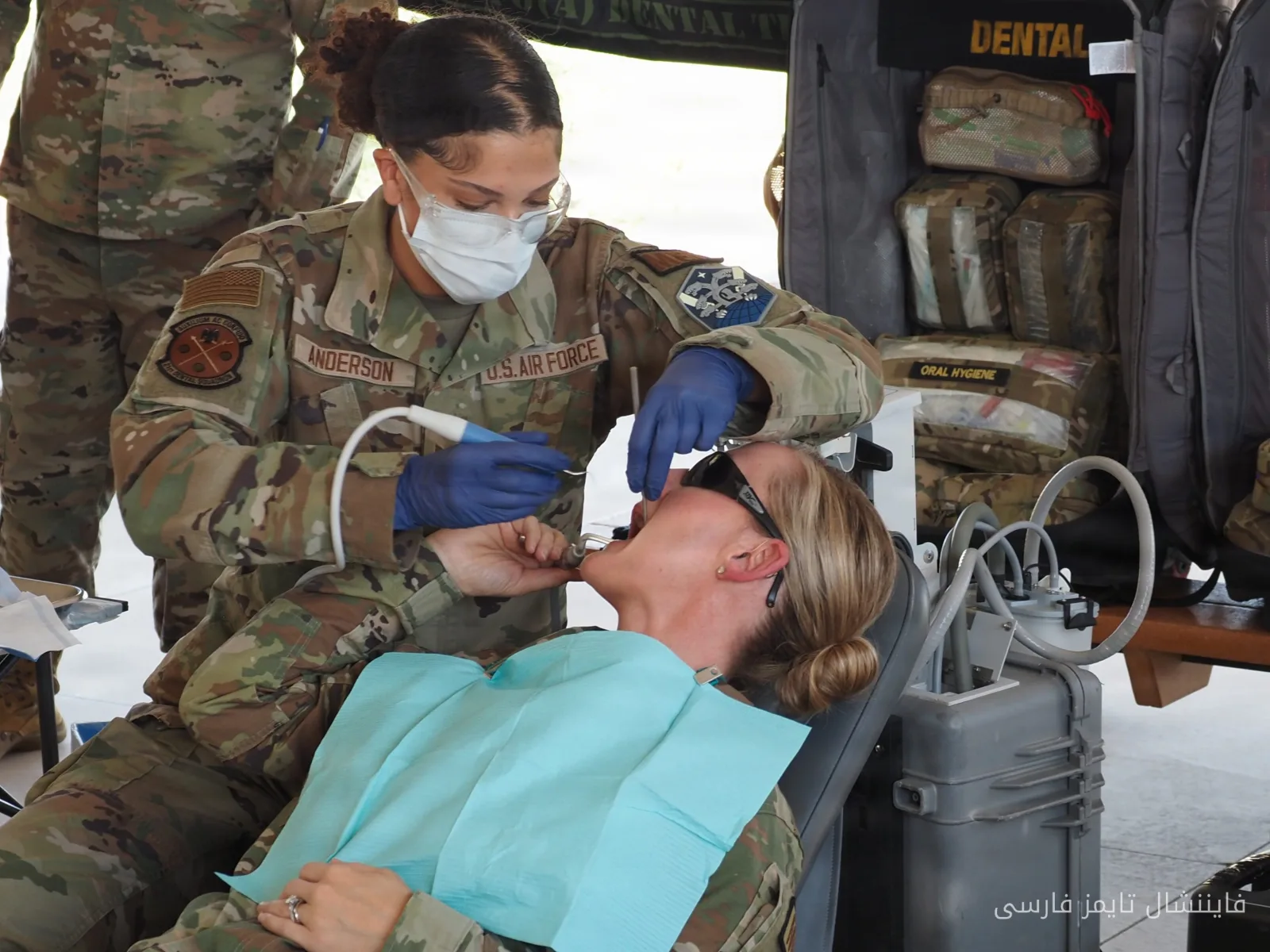
The United States military forces, especially the Army dentists, have warned about the challenges arising from neglecting dental conditions in military exercises. They believe that dental problems can easily take troops out of the battlefield and put additional pressure on the military medical system.
Predicting Dental Problems in Wars
Many large Army exercises do not include emergency dental scenarios, which causes commanders to face an incomplete picture of medical needs and casualty evacuation. Dental problems can quickly render troops "non-operational" and affect their ability to perform critical tasks such as using weapons. This issue has been described as the "hidden burden of casualties."
Past experiences show that in wars, the demand for dental services has been so high that in the Iraq War, dental problems constituted ١٩ percent of all treatments in military hospitals near the front lines. Additionally, nearly ١٦ percent of all medical evacuations among combat forces in Iraq and Syria were due to dental diseases and other non-combat injuries.
Need for Reform in Dental Capabilities
Army dentists emphasize that usable dental capabilities are decreasing, and there is an urgent need to accurately model emergency dental conditions in military exercises. Given the challenges of transporting patients to hospitals in modern warfare conditions, dentistry could be one of the top five reasons for casualty evacuation in future wars.
Ultimately, dentistry is recognized as a simple and effective solution for the overall medical burden, and there is a felt need to improve dental services in the battlefield and close to the troops.